Kristian Kähler

Kristian Kähler

Kristian Kähler CEO

CEO berlin producers, sounding images, heidefilm
Kristian Kähler
Contact:

+49 30 44 03 169 – 17
kristian.kaehler[at]berlin-producers.de

Kristian Kähler is an author and managing director at Berlin Producers. In this role, he has developed numerous new formats and attends major international documentary fairs such as MIP, Sunnyside, Sheffield, IDFA and Science Congress. He has worked on well over 200 documentaries as writer, director and producer. For his documentary “Propaganda Battle for Ukraine” he received the Blue Panther, the former Bavarian Television Award, in 2023. In 2009, he received the European Parliament Film Prize for his film “Who’s Afraid of Europe?”.

Since 2011, Kristian has been vice-chairman of the Documentaries section in the German Producers Alliance.

Filmography

Films as a Producer

2024
THE PICKERS – BITTERE FRÜCHTE(1x 90 min, WDR / ARD Mediathek / ARTE / eine Co-Produktion mit Neda Films Griechenland und SP-I, Portugal, gefördert durch Creative Europe MEDIA)

2023
WILDE LANDSCHAFT – RAUE WEGE (HOTROADS)
(6×43/52 min, ZDF/Arte in CoProduktion mit Autentic)

BETRIFF – WOHNEN AB 60 – WO LEBEN IM ALTER?
(1x 43 min, SWR)

2022PLANET DER SCHAFE
(2×43 min, 1×90 min, NDR / ARTE in Co-Produktion mit North Macedonian Film Agency, gefördert durch Nordmedia)

2021
BASEBALLSCHLÄGERJAHRE
(6×15, 1×90 min, RBB)

WIR KINDER DER MAUER – TOD IN DER OSTSEE
(4×22, 1×90 min, MDR, ARD)

2018 – 2020
BEETHOVEN 9 – BEETHOVENS 9. SYMPHONIE AUF 5 KONTINENTEN
(1×90 Minuten und 10×30 Minuten)
Internationale Musikdokumentation mit ZDF/Arte, Deutsche Welle, Arte France, BKM, Gedeon Frankreich)

THE WAR ON MY PHONE
(90 Minuten, WDR, NRW Filmstiftung, Deutsche Welle)

2015 – 2017
INSELN DER QUEEN
(ZDF/Arte 10×52 und 10×43 Minuten sowie 2x 43 Minuten „Länder, Menschen, Abenteuer, NDR)

BELLO ALLEIN ZUHAUS – WARUM DER HUND MANCHMAL VERRÜCKT SPIELT DAS GEHEIME LEBEN DER KATZEN
(2×43, Minuten SWR)

PROJECT GOLD / EQUALIZER – WIE DIE WISSENSCHAFT REKORDE MACHT
(2x 52 Minuten, 2x 43, 2x 26, internationale Koproduktion mit ZDF Lesch Kosmos, ZDF Arte, Kensington Films, CBC Kanada, Inica Films Spanien, PreTV Österreich, ORF)

PROJECT GOLD / EQUALIZER – WIE DIE WISSENSCHAFT REKORDE MACHT
(1x 52, 1x 43, 1x 26, internationale Koproduktion mit ZDF Lesch Kosmos, ZDF Arte, Kensington Films, CBC Kanada, Inica Films Spanien)

BELLO ALLEIN ZUHAUS – WARUM DER HUND MANCHMAL VERRÜCKT SPIELT
(2×43, SWR)

Reise / Küche
LANDTRÄUME
(26 x 26min., ZDF/arte)

ZU TISCH IN…
(192 x 26 min., ZDF/arte, seit 2001)

EIN LADEN IN …
(26 x 26 min., ZDF/arte, 2006)

BEI AUFTRAG ENTDECKUNG
(4 x 43 min., ZDF/arte, Co-Produktion mit fact & film, Bremen; Nordmedia 2009)

FAHRT INS RISIKO / Hotroads
(10 x 43 min., ZDF/arte, 2010-2015 Koproduktion mit LIC und Servus TV)

Zeitgeschehen
UNSERE GSCHWENDS – DIS SENIORENTESTER UNTERWEGS
(3 x 30 min., SWR)

HINTER DEN MAUERN VOM …
(3 x 26 min., SR/arte/ARD, 2007)

AUFBRUCH IM NORDMEER
(3 x 43 min., arte/RBB/WDR 2006)

SCHULGESCHICHTEN
(18 x 26 min., ZDF/arte 2005-2006 – distributed in more than 10 different countries)

ALT & DOOF?
(2 x 43 min., SWR/NDR, 2010)


Filme als Autor

2023
DIE PROPAGANDASCHLACHT UM DIE UKRAINE
(1×90 min, WDR / HR / DW / ARTE)

2021
DER APENINN – ITALIENS WILDER SÜDEN
(1×43 min, SWR arte / NDR)

2019
DIE WELT DER BRÜCKEN – WALES
(1×30 min, arte)

2018
INSELN DER QUEEN II – BERMUDAS

2016
ZU TISCH 200 – NORDIRLAND
(26 Min, ZDF/Arte)

INSELN DER QUEEN – HEBRIDEN
(43/52 Min, ZDF/Arte)

2015
WEM GEHÖRT DIE STADT?
(90 min, ARD, 1. Preis Blickpunkt Deutschland – Wettbewerb Dokumentarfilm)

2014
ZU TISCH IM DONAUDELTA
(26 min., ZDF/arte)

FAHRT INS RISIKO
(43 min., ZDF/arte, LIC China, Servus, autentic)

2013
ZU TISCH AUF DEN HEBRIDEN
(26 min., ZDF/arte)

2012
ZU TISCH AUF JERSEY
(26 min., ZDF/arte)

VERGESSENE VÖLKER: DIE EWENKEN IN SIBIRIEN
(43/30 min., WDR/arte)

DE GAULLE & ADENAUER: EINE DEUTSCH-FRANZÖSISCHE FREUNDSCHAFT
(52/43 min., SWR/arte)

2011
ZU TISCH IN MARAMURES
(26 min., ZDF/arte)

SEEBÄDER BRIGHTON
(43 min., WDR/arte)

LANDTRÄUME CORNWALL
(26 min., ZDF/arte)

2010
DINOSAURIER – SPURENSUCHE IN DER URZEIT
(30/52 min., NDR/arte)

LANDTRÄUME: Cornwall
(43 min., ZDF/arte)

FAHRT INS RISIKO: Im Labyrinth von Dhaka
(43 min., ZDF/arte)

ALT & DOOF? Geld
(43 min., SWR/NDR)

2009
UNTER DEUTSCHEN DÄCHERN: Berlin-Prenzlauer Berg
(43 min., Radio Bremen)

TRAUMBERUF KOCH?
(43 min., SWR)

2008
ZU TISCH IN LAPPLAND
(26 min., ZDF/arte)

LEBEN AUF DEM FLUSS – KANADAS LETZTE FLÖSSER
(43 min., ZDF/arte)

AUFBRUCH IM NORDMEER – DIE NORDOSTPASSAGE
(43 min., RBB/WDR/arte)

2007
WER HAT ANGST VOR EUROPA? Wie die EU nach Polen kam
(83 min., ZDF/arte)
Journalistenpreis des Europäischen Parlaments 2009

SCHRUBBEN AUF DEM SONNENDECK
(30 min., ZDF)

ZU TISCH IN KALABRIEN
(26 min., ZDF/arte)

2006
MENSCHEN UND STRASSEN: DIE AMALFITANA
(26 min., SR/arte)

ZU TISCH IM ALLGÄU
(26 min., ZDF/arte)

2005
ZU TISCH IN IRLAND
(26 min., ZDF/arte)

ZU TISCH IN KIRGISISTAN
(26 min., ZDF/arte)

DIE WILDEN REITER VON KIRGISISTAN: EIN LEBEN AUF PFERDEN
(45 min., ZDF/arte)

SCHULGESCHICHTEN: Das UWC College in Triest
(26 min., ZDF/arte)

DIE TSUNAMI-WARNER
(42 min., ZDF/arte)

2004
ZU TISCH AUF KORSIKA
(26 min., ZDF/arte)

DIE THERMEN DER TOSKANA
(45 min., ZDF/arte)

GLANZ DER ERDE: Kupfer aus Chile
(45 min., ARD/RBB/arte)

SCHULGESCHICHTEN: Das San Giuseppe de Merode in Rom
(26 min., ZDF/arte)

ZU TISCH IM SCHWARZWALD
(26 min., ZDF/arte)

2003
KANN MAN LEBEN VERSICHERN?
(30 min., arte-Themenabend)

ZU TISCH IN FRIESLAND
(26 min., ZDF/arte)

WENN DIE VERSICHERUNG NICHT ZAHLT
(45 min., NDR/ARD)

SCHULGESCHCIHTEN: Die Weydon School in England
(26 min., ZDF/arte)

ZU TISCH IN DER SCHWEIZ
(26 min., ZDF/arte)

2002
ZU TISCH IN WALES
(26 min., ZDF/arte)

DER LEHRTER BAHNHOF
(36 min., Kabel1/Reportage)

DER PREIS DER ANGST
(30 min., SWR)

2001
ZU TISCH AN DER ALGARVE
(26 min., ZDF/arte)

BLÜHENDE LANDSCHAFTEN
(45 min., ORB)

LUXUS IN ST. TROPEZ
(36 min., PRO7)

ZU TISCH IN DER BRESSE
(26 min., ZDF/arte)

2000
UNTER DEUTSCHEN DÄCHERN: Die Platte wird plattgemacht
(45 min., ARD/RB)

MENÜS, MODELS UND MATRATZEN: DEUTSCHLANDS GRÖSSTES HOTEL
(30 min., ARD Exklusiv/WDR)

SCHNAPP SIE DIR ALLE! Das Pokémon-Syndrom
(30 min., ARD/SWR)

DAS KURZE LEBEN DES OMAR BEN NOUI
(45 min., ORB)

1999
ENDSPURT IM WAHLKAMPF
(30 min., ORB)

1996
FEINDBILD FREMDER
(30 min., ORB)


In the Maze – The Musician Jörg Widmann

In the Maze – The Musician Jörg Widmann

In the Maze - The Musician Jörg Widmann

A film by Holger Preuße, 42 / 52min., BR/ARTE 2022

Music takes on a life of its own in the moment of writing, believes Jörg Widmann. It assumes its own form, becoming a living being that forges its own path. As such, it remains a fragment, because it is not what he, the writer, had intended.

For Widmann, the image that best describes this progression is a maze. Today, this has become the theme that runs through his life’s work, one that he has explored musically over the course of six distinct pieces. In the maze, one gets lost and bumps into things. There are moments “where it doesn’t go any further. And that is something that I often experience as problematic and very painful in composing. As happy as composing is.” Increasingly, he is led out of the maze of composing into which he has been drawn by his other role of clarinettist (for many years considered one of the world’s best) by his activities as a conductor.

You are currently viewing a placeholder content from Vimeo. To access the actual content, click the button below. Please note that doing so will share data with third-party providers. More Information

We follow Jörg Widmann into his maze, reaching for the thread that runs through his life and work. Together with him, we experience the ups and downs, the euphoric moments as well as the moments of crisis that are brought about by the process of writing. We encounter him backstage and on stage. And we discover that it is in fact a bundle of threads that intertwine to form a tangle, whereby the composer without the clarinettist, the conductor without the composer, or Jörg Widmann without the human, is inconceivable.

The film accompanies Jörg Widmann in the composition of his trumpet concerto “Towards Paradise (Labyrinth VI)”, commissioned by the Leipzig Gewandhaus Orchestra and the Boston Symphony Orchestra. We witness the piece take shape, from the first drafts to the premiere performance. As clarinettist and conductor, we see him at the Salzburg Festival, in the Boulez Hall and at the Konzerthaus Berlin, and experience this ‘universal musician’ alongside Daniel Barenboim (as pianist), with the celebrated violinist Anne Sophie Mutter, for whom he composed his String Quartet No. 6, and during a concert tour of Taiwan together with his sister, the violinist Carolin Widmann.

Paul Dessau – Paul Dessau  Let’s hope for the Best

Paul Dessau – Paul Dessau Let’s hope for the Best

Der Komponist Paul Dessau - Von Hamburg über Hollywood in die DDR

Ein Film von Anne-Kathrin Peitz, 53 min., NDR/ARTE 2023

Paul Dessau (1894-1979) has been a violin prodigy, became Otto Klemperer’s assistant and finally an accomplished conductor. He wrote operetta and film music – from mountain films with Leni Riefenstahl by director Arnold Fanck to Walt Disney’s animated films. Born in Hamburg, he was a soldier in World War I and a Jewish exile in France and the USA in WWII. In Hollywood, he meanwhile worked on a chicken farm and wrote the sounds for some celluloid blockbusters as an anonymous “music slave” for the major studios.

As a convinced communist, Paul Dessau settled over to the GDR in 1948. He worked with Bertolt Brecht as well as his fourth wife, the stage directing idol Ruth Berghaus, and had a significant influence on the socialist music scene and stage art. He became a music teacher for children at his son Maxim’s school in Zeuthen. His works were taught in schools, his “Thälmann-Kolonne” became soon very popular, but at the same time he was condemned as a formalist because of his often idiosyncratic tonal language. He became a GDR state composer who was mainly celebrated on the outside, but sharply criticized on the inside.

With over 430 works to his name, Paul Dessau has been what a workaholic is being called, with his explosive, often unwieldy sound language an inconvenient man who wanted to change society and help shape it: “Music is not a medium for relaxation. Absolutely not. There are pills or walking for that, which is cheaper. Music is really exhausting – to make and to listen to.”

Who has this man of conviction been, who truly fought for musical innovation and clung to the communist idea with almost naïve steadfastness? Who was this person whose appearance could be just as ornery and edgy, witty and contradictory, laconic or loving as his music?


“Paul Dessau: Let’s hope for the best” by Anne-Kathrin Peitz sketches an artist’s life between conformity and repulsion, political idealism and musical individuality, in which the changeable German-German history of the 20th century is strikingly condensed as if under a burning glass.

The film portrait consciously traces the contradictions in Dessau’s character, life and work and embeds the man and his music in the historical context. The cinematic approach to the protagonist and his sound cosmos becomes a jigsaw puzzle, both literally and figuratively, whose individual – often disparate – pieces slowly come together to form an overall picture.

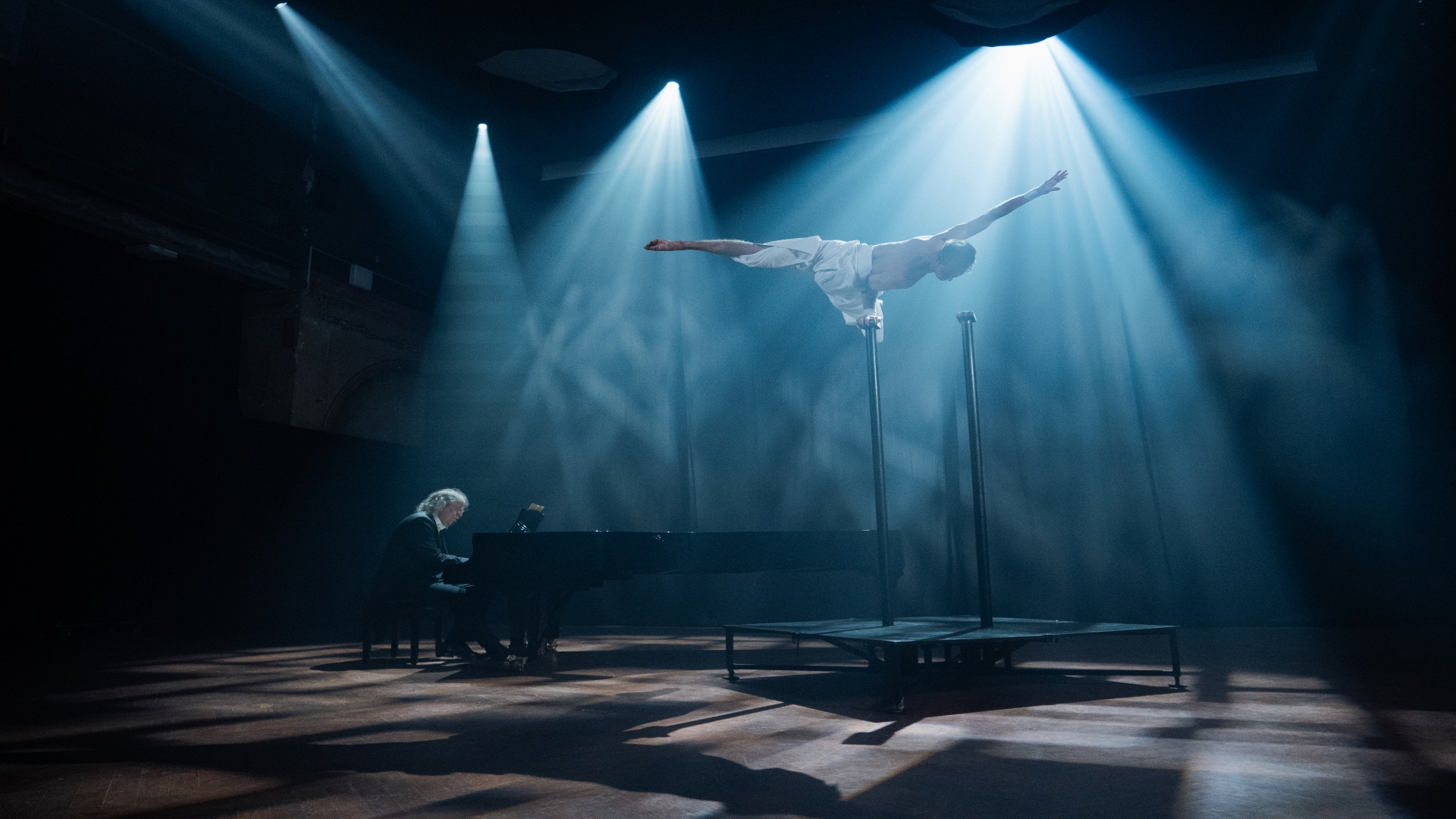
In staged concert scenes, artists translate his sound into body language and tongue-in-cheek cartoons his song humoresques into associative picture stories. Musicians play in quarries, orchestral works become music clips, pupils of the “Paul Dessau” comprehensive school in Zeuthen walk in the footsteps of their namesake. Historical recordings evoke the world and stations of Dessau’s life, and the composer himself has his say in rarely shown archive scenes. In addition, interview partners – from politician Gregor Gysi to former concert hall director Frank Schneider or the American jazz composer Jack Cooper as well as composer and pianist Steffen Schleiermacher – try to create a portrait of Paul Dessau not only with words, but actually by doing a puzzle.


The General and the Electrician – Power Struggle in Poland

The General and the Electrician – Power Struggle in Poland

The General and the Electrician - Power Struggle in Poland

A Film by Holger Preuße, WDR/ARTE, 43/52min, 2021

They are two people who could not be more different: Here, the general who had made his career in the party and the military, eventually rising to become the most powerful man in Poland; there, the electrician who challenged the powerful and became the leader of the first independent and free trade union in a socialist country. In the winter of 1981, the situation escalated and the military and state leader, General Wojciech Jaruzelski, knew no other way to contain the growing influence of the Solidarność union under his leader, Lech Wałęsa, than to impose martial law on December 13th.

Now, 40 years later, the film looks back on the biographies of the two dissimilar men who were closely interwoven for a decade – until the trained electrician succeeded General Jaruzelski in the office of President in December 1990.

The film tells the story of the battle between two rivals and lets close confidants and contemporary witnesses have their say. For example, the union leader and Nobel Peace Prize laureate Lech Wałęsa; the co-founder of Solidarność, Bogdan Borusewicz, who called on Wałęsa to take part in the great strike in August 1980; Wałęsa’s collaborator Anna Maria Mydlarska; former Le Monde Poland correspondent Bernard Guetta; the underground fighter and documentarist of Polish martial law Małgorzata Niezabitowska; Jaruzelski’s press spokesman Jerzy Urban and Stanislaw Ciosek, who on behalf of Jaruzelski conducted political negotiations with Wałęsa during his internment.

With the help of archive material and interviews, the documentation revives the turbulent times in Poland in the 1980s, thus providing an insight into this important chapter of contemporary European history. The GDR civil rights activist and long-time head of the Stasi Documentation Authority, Roland Jahn, believes that the fall of the Berlin Wall would not have been possible without the political events in Poland in the 1980s.

At the end of the film, Lech Wałęsa sums it up in his well-known pragmatic way: “I’m not a classical politician. I actually didn’t want it, I just filled it out. I was raised with the ambition that if I set out to do something, I have to get the best out of myself. “

You are currently viewing a placeholder content from Default. To access the actual content, click the button below. Please note that doing so will share data with third-party providers.

More Information

Iris Ehlbeck-Gehlert

Iris Ehlbeck-Gehlert

Iris Ehlbeck-Gehlert

Production Manager, Managing Co-Director
Iris Ehlbeck-Gehlert

Contact:

+49 30 44 03 169 – 0
iris.gehlert[at]berlin-producers.de


Iris Ehlbeck-Gehlert always keeps an overview and, as head of production, has been the organisational talent of berlin producers and its sister companies for over fifteen years. She juggles figures just as confidently as she deals with demanding (and less demanding) colleagues, filming problems and funding applications. She also takes care of IT problems, occupational safety and – together with her colleagues from production – the most important thing of all: making sure the supply of chocolate never runs out.

Since July 2025, Iris has also taken over the co-management of Berlin Producers together with her colleague Saskia Geisler.