
Planet of the Sheep

Planet of the Sheep

Planet of the Sheep

A film by Marvin Entholt, 2 x 45min, NDR/ARTE 2021
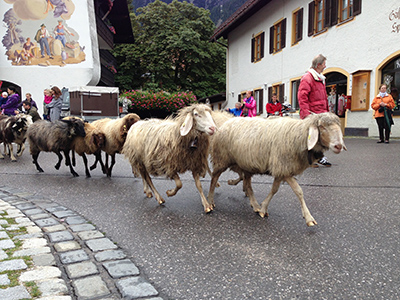
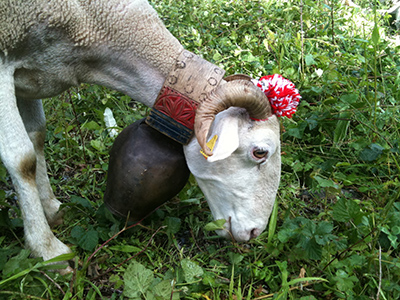
Sheep are probably the most underestimated animal in the world. Without them, mankind would not be where it is today. Food, clothing – the unpretentious ram has been providing man with all this for eleven thousand years. The animals have made societies grow, they prepared people for culture and to this day they guarantee life and prosperity in many parts of the world. ‘Planet of the Sheep’ goes on a search for traces and clues among shepherds and breeders all over the world.

In Europe, the traditional shepherding profession is on the verge of extinction. In the Lüneburg Heath, only a few shepherds are still on the road with their herds of Heidschnucken to preserve the cultural landscape. Though some old shepherding cultures are still alive, in Sardinia as well as in northern Macedonia living the tradition of transhumance of many thousands of animals. In Scotland, a young, female generation is breaking new ground to save the ancient culture of sheep farming into the 21st century. And in Spain, too, new forms of sheep farming are becoming established: shepherd schools are training a new generation of shepherds.

China is going its own way: here, sheep are kept intensively by the hundreds of thousands to satisfy the population’s hunger. But on a smaller scale, quality of life and often human survival are directly linked to the existence of the sheep – as in Ethiopia, where farmers can finance their children’s schooling thanks to just a few animals. The undemanding sheep is a master of adaptation to almost any environmental condition – and thus probably also a helper in climate change.

Part 1:   Out into the World

Part 2:   Out into the furture

sponsored by :

Sisi’s Heirs – The Children of Empress Elisabeth

Sisi’s Heirs – The Children of Empress Elisabeth

Sisis Erben – Die Kinder der Kaiserin Elisabeth

Ein Film von Martin Koddenberg, 52 min., ZDF/ARTE 2022

available until 20.01.2023 in the ZDF Media Library

A ‘Loving mother’? The real Empress Elisabeth of Austria is the exact opposite of what the legendary “Sissi” trilogy from the 1950s shows. Throughout her life, the eccentric Sisi put her own interests first. How does she live with her children?

You are currently viewing a placeholder content from Vimeo. To access the actual content, click the button below. Please note that doing so will share data with third-party providers.

More Information

After her marriage to Emperor Franz Joseph I in 1854, Sisi feels the pressure of her relatives: the continuation of the dynasty depends on the young woman. A year later, at the age of 17, she gives birth to her first child, Sophie. But even the birth of the second daughter, Gisela, does not fulfill the expectations for a male successor. When Sophie dies during a trip to Hungary in 1857, deep cracks appear in the parents’ relationship.

Only the birth of the heir to the throne, Rudolf, in 1858 defuses the situation. Sisi then takes off and leaves for two years. Her children grow up without her during this time – when Sisi returns, they do not recognize “the strange woman”.

In 1868, Sisi gives birth to her fourth child, Marie Valerie, in what is now Budapest. This “Hungarian daughter” is smothered with love and affection by her mother. When she emancipates herself, she marries into the “scandalous line” of the Habsburgs, expresses herself in a German-national way. Nevertheless, with her nine children and numerous grandchildren, she ensures that the family is still widely branched out today.

Sisi was only just able to prevent Emperor Franz Joseph from raising the heir to the throne to become a strict soldier. From then on, the emperor keeps him away from all decisions. Rudolf takes refuge in a world of drugs and alcohol excesses. He kills himself and his mistress. Sisi is caught off guard: the empress has turned away more and more from her family. She lives in her own world, which consists mostly of traveling, horseback riding and writing poetry. Meanwhile, Emperor Franz Joseph worries about his fatherless granddaughter Elisabeth-Marie, known as “Erszi”. She becomes a rebel at the Viennese court. After the fall of the empire, she begins a new life in SPÖ circles and marries a representative of the Viennese working class.

The Carnival of the Animals – The Story of a Score

The Carnival of the Animals – The Story of a Score

The Carnival of the Animals – The Story of a Score

A film by Holger Preusse and Philipp Quiring, 52 min., WDR/ARTE 2021

Nominated for the Rose d’Or-Award 2021, in the Category„Arts“, as well as the Golden Prague Awards 2021

You are currently viewing a placeholder content from Vimeo. To access the actual content, click the button below. Please note that doing so will share data with third-party providers.

More Information

The “Carnival of the Animals” is his best known work. Camille Saint-Saëns never wanted to publish it during his lifetime. On the 100th anniversary of the composer’s death in December 2021, the music piece itself tells us how the dwindling act of birth occurred in the composer’s mind. It is the notes that tell us of its suffering and of its triumph on the great stages of the musical world.

According to the will of its creator, Camille Saint-Saëns’ “Carnival of the Animals” was to be performed only once, in March 1886, on Shrove Tuesday. And now this piece has stolen the show from Camille Saint-Saëns’ other works for a hundred years. Directors have brought Saint-Saëns’ music to Hollywood. At the Cannes International Film Festival, “The Aquarium” is the signature tune.

The film shows that “Carnival” is more tha n the musical characterization and exaggeration of various species. There are numerous contemporary historical and biographical references in “Carnival”, as revealed by Venezuelan pianist Gabriela Montero, French-Belgian cellist Camille Thomas, and U.S. organist and composer Cameron Carpenter.

For the documentary, musical notes were elaborately animated, telling us the story from the perspective of the piece of music. The role of the narrator was taken over by German actor Sebastian Koch. An orchestra specially assembled for the film lets the music of the “Carnival of the Animals” resound.

The Grand Scuttle – Sinking the Germans High Seas Fleet

The Grand Scuttle – Sinking the Germans High Seas Fleet

The Grand Scuttle – Sinking the Germans High Seas Fleet

A film by Martin Koddenberg, 43 min, ZDF/ARTE 2021

Ludwig von Reuter is at the center of events. In November 1918, in the midst of the political confusion of the end of the war, the rear admiral loyal to the Kaiser becomes a decisive protagonist in a complex political constellation. He is appointed to decommission the German High Seas Fleet in a British port. The task is a balancing act: while his own crews revolt, the British guards are just lurking to take over the ships in a hostile manner. For seven months, von Reuter lives on the gradually rusting steel hulks, waiting for the outcome of the peace negotiations in Versailles.

There, the German ships become the bone of contention between the Allies. Who should get these heavily armored battleships is unclear. Distributing them would have implications for the already complicated balance of power on the world’s oceans. When the draft Treaty of Versailles is published, the decision has been postponed once again. The only thing that is certain is that they will never return to Germany.

When Ludwig von Reuter learns of this, he secretly orders them to sink themselves in front of the British guards. The consequences for the Versailles Treaty are grave.

The sinking represents the proverbial downfall of the Kaiserreich. It reveals the thought patterns of naval officers loyal to the Kaiser: Their outdated notions of honor seem like echoes of an era that has done away with itself. A similar pattern is to repeat itself years later, when the Nazi regime attempts to manage its own demise under the motto “die and become.”

BioNTech – Project Lightspeed

BioNTech – Project Lightspeed

BioNTech - Project Lightspeed

A film by Michael Schindhelm, 52 min, ZDF/ARTE 2021

Available in the online ARTE media library until 18.04.2025


With the BioNTech vaccine, medical scientists Uğur Şahin and Özlem Türeci achieved a breakthrough after years of research.

The mRNA technique, which has been an important component for cancer research for many years, is now making history as a vaccine against Covid-19. But where does cancer research go from here? Can the mRNA technique also help to fight malaria? The film shows the incredible achievement of a start-up company from Mainz for global health.