Tschaikowsky in Moskau – Julian Rachlin & Denis Matsuev

Tschaikowsky in Moskau – Julian Rachlin & Denis Matsuev

Tschaikowsky in Moskau – Julian Rachlin & Denis Matsuev

A Film by Isabel Hahn, WDR/arte, 43 min., 2021

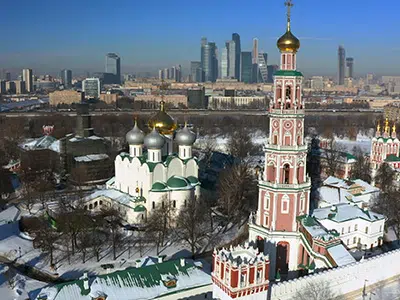
For Denis Matsuev and Julian Rachlin, it is an affair of the heart. The two friends perform Peter Tchaikovsky’s First Piano Concerto – one of the war horses of music – together for the first time. Tchaikovsky composed the piece in Moscow. It would go on to become an integral part of Russian culture. Matsuev goes a step further: “It is the paean of Russian music.”

Vimeo

By loading the video, you agree to Vimeo's privacy policy.
Learn more

Load video

Lithuanian-Austrian violinist and conductor Julian Rachlin has personal roots in Russia. His father is from Chelyabinsk in the Urals and his parents studied music in St. Petersburg and Moscow: “I speak the language, and that probably resonates among the musicians”.

The young musicians that make up the Russian National Youth Symphony Orchestra (RNYSO) come from 42 different regions. “I love this orchestra. Every year across the country, our foundation searches for talented young people. And every year we discover fantastic young musicians, many of whom don’t even come from musical families. It’s magical,” says Denis Matsuev. In 2018, the pianist helped to found one of Russia’s largest youth orchestra projects.

He himself was discovered as a teenager in his hometown of Irkutsk in Siberia, whereupon he moved to Moscow to study at the renowned Tchaikovsky Conservatory. “This is Denis’ second living room.” says Rachlin with a laugh. “Perhaps he’s on this stage more often than he’s at home.” But there is no trace of overfamiliarity: the musicians are in love with the hall, which is regarded as one of the best concert venues in the world, thanks in part to its outstanding acoustics.
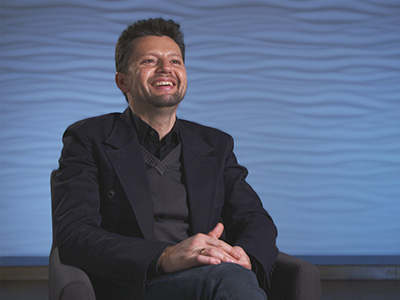
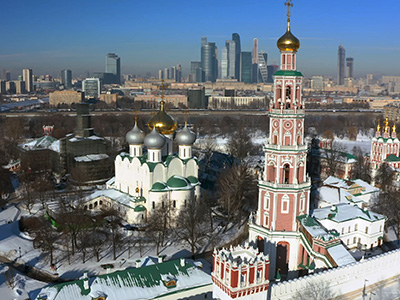
The rehearsals take place in the south of Moscow. Denis Matsuev joins the musicians the day before the concert. Their single rehearsal together is brief and intense and reveals the intimate relationship between the two artistic personalities, who have a contagious joy in making music together. Tchaikovsky’s music awakens personal memories in Matsuev – of a childhood sweetheart and of the occasion when he played the piano concerto before an audience for the first time, at just twelve years of age: “I was probably the happiest boy in the world.”

Following the rehearsal, Julian Rachlin takes us on a foray through the wintry city and to old friends – also musicians – who live in the south of Moscow. Together, they spend the evening before the concert over a dinner of culinary specialties and take a nocturnal sleigh ride.

Magic Moments of Music | The Centenary Ring in Bayreuth 1976

Magic Moments of Music | The Centenary Ring in Bayreuth 1976

Magic Moments of Music | The Centenary Ring in Bayreuth 1976

A film by Eric Schulz, ZDF/arte and C Major Entertainment, 52 min., 2021

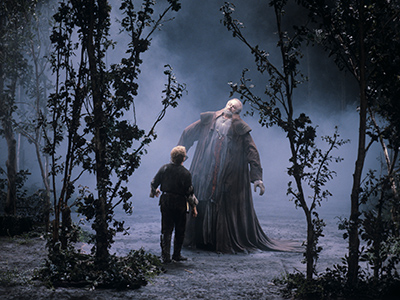
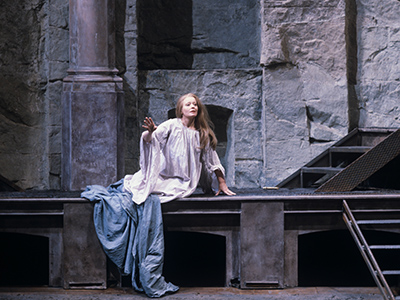
Uproar, disruption, violent dispute – this was the response to the much-anticipated centenary of the Bayreuth Festival in 1976, which was to be marked by a new production of Richard Wagner’s “The Ring of the Nibelung”. But before Pierre Boulez could step up to the conductor’s podium and the curtain could rise on Bayreuth’s Green Hill for Patrice Chéreau’s bold new production, the festival was rocked by artistic and political upheaval. The film shows excerpts from this unforgettable opera event. Contemporary witnesses look back and comment on events both on and off the boards.

Soprano Dame Gwyneth Jones, contralto Hanna Schwarz and tenor Heinz Zednik were on stage as it unfolded; French director Vincent Huguet tells of his collaboration with Patrice Chéreau, whose assistant he would later become. The young singer Anna Prohaska, frequent Wagner singer Günther Groissböck and director Barrie Kosky have dealt at length with the Centenary Ring and talk about their impressions. The interviewees also include writer Friedrich Dieckmann, who authored one of the most important reviews of the events in Bayreuth. The film tells how one of the greatest scandals in opera went on to become one of the greatest musical moments of all.

Magic Moments of Music | Jessye Norman and Kathleen Battle “Spirituals”

Magic Moments of Music | Jessye Norman and Kathleen Battle “Spirituals”

Magic Moments of Music | Jessye Norman and Kathleen Battle sing “Spirituals”

A film by Dag Freyer, ZDF/arte and C Major Entertainment, 52 min., 2021

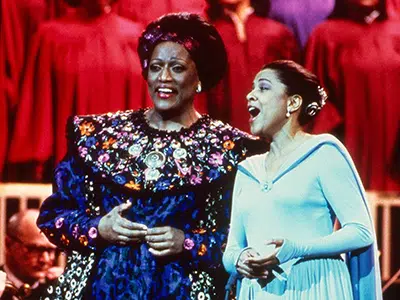
When Jessye Norman and Kathleen Battle took the stage of Carnegie Hall March 18, 1990 a breath of history wafted through America‘s most famous concert hall. It is a camera view of the audience that makes clear how long the road to this moment in music history was: there, the now very old African-American opera singer Marian Anderson, one of the great voices of her generation. In 1939, she had been barred from singing in Constitution Hall, because she was black. The twelve-year-old Jessye Norman had absorbed Anderson‘s biography, just like the music she performed that evening together with her great colleague and competitor Kathleen Battle: Spirituals.

Vimeo

By loading the video, you agree to Vimeo's privacy policy.
Learn more

Load video

That evening in March 1990 was under enormous pressure of expectation and the tension crackled at all corners. For one thing: Would the two compete? Where did the competition lie? Divas who would actually manage to sing together and not against each other? But the two divas take Carnegie Hall by storm; critics and audiences alike pay homage to them: It is a musical feast of charisma, virtuosity, liveliness and show. Jessye Norman dominates the stage with her authentic timbre and an African colourful costume, Kathleen Battle still hits the finest high coloraturas.

The Carnival of the Animals – The Story of a Score

The Carnival of the Animals – The Story of a Score

The Carnival of the Animals – The Story of a Score

A film by Holger Preusse and Philipp Quiring, 52 min., WDR/ARTE 2021

Nominated for the Rose d’Or-Award 2021, in the Category„Arts“, as well as the Golden Prague Awards 2021

Vimeo

By loading the video, you agree to Vimeo's privacy policy.
Learn more

Load video

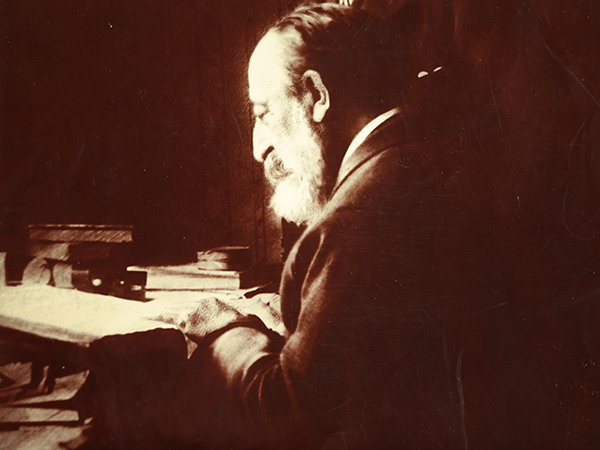
The “Carnival of the Animals” is his best known work. Camille Saint-Saëns never wanted to publish it during his lifetime. On the 100th anniversary of the composer’s death in December 2021, the music piece itself tells us how the dwindling act of birth occurred in the composer’s mind. It is the notes that tell us of its suffering and of its triumph on the great stages of the musical world.

According to the will of its creator, Camille Saint-Saëns’ “Carnival of the Animals” was to be performed only once, in March 1886, on Shrove Tuesday. And now this piece has stolen the show from Camille Saint-Saëns’ other works for a hundred years. Directors have brought Saint-Saëns’ music to Hollywood. At the Cannes International Film Festival, “The Aquarium” is the signature tune.

The film shows that “Carnival” is more than the musical characterization and exaggeration of various species. There are numerous contemporary historical and biographical references in “Carnival”, as revealed by Venezuelan pianist Gabriela Montero, French-Belgian cellist Camille Thomas, and U.S. organist and composer Cameron Carpenter.

For the documentary, musical notes were elaborately animated, telling us the story from the perspective of the piece of music. The role of the narrator was taken over by German actor Sebastian Koch. An orchestra specially assembled for the film lets the music of the “Carnival of the Animals” resound.

Concert film trilogy with Robin Ticciati and the DSO

Concert film trilogy with Robin Ticciati and the DSO

Concert film trilogy with Robin Ticciati and the DSO

A Concert Film by Frederic Wake-Walker and Martin Baer, 2021

Available on the DSO-Website

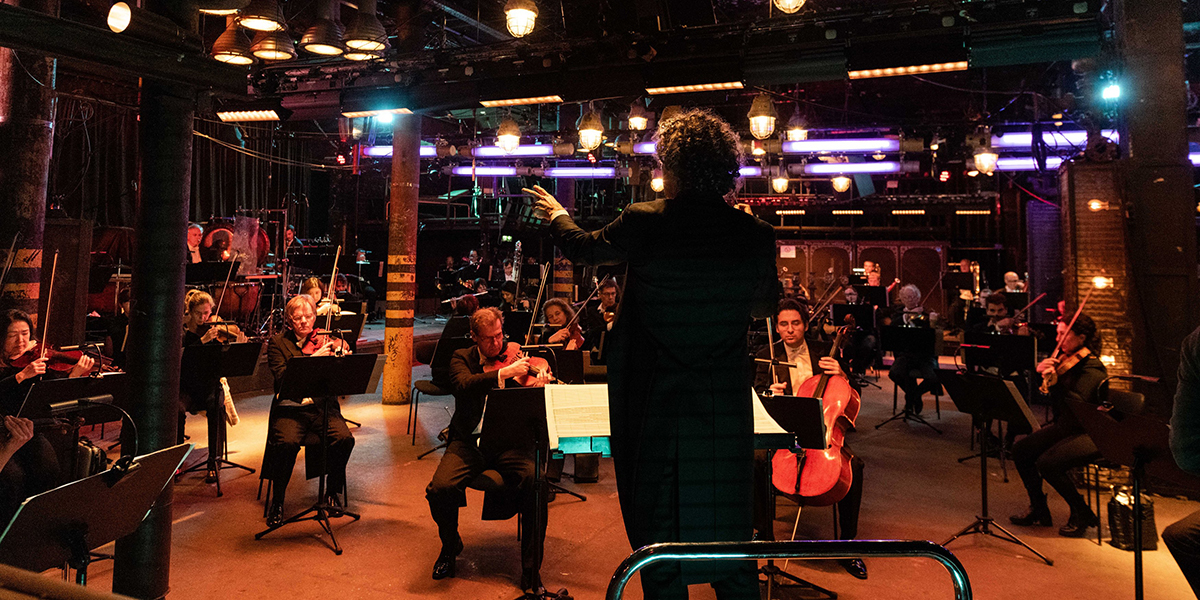
Classical music with a difference: At Sisyphos techno club, principal conductor Robin Ticciati and the Deutsches Symphonie-Orchester Berlin interpret Ondřej Adámek’s ›Dusty Rusty Hush‹ – a piece that the Berlin-based Czech composed on the occasion of the shutdown of a factory and the DSO is now using to call attention to the present desperate situation of the Berlin club scene.

The motto called ›IN EXILE – OF GODS AND MEN‹ connects ancient mythology, the Renaissance and the present: The Friedrichswerdersche Church, which was re-opened in October for museum exhibitions but had to close again right away due to the pandemic, is a meeting place for the arts with its collection of 19th century sculptures. This is where the film begins with Gabrieli’s ›Canzon in echo duodecimi toni à 10‹. A counterpoint to Mozart’s Jupiter Symphony on gut strings and natural trumpets resounds with Britten’s ›Metamorphoses‹ – from the middle of the forest.

Episode 1

Giovanni Gabrieli ›Canzon in echo duodecimi toni à 10‹ for Brass Player Ensemble

Igor Strawinsky ›Apollon musagète‹ – Ballet for String Orchestra

Ondřej Adámek ›Coups d’ailes‹ for Brass Player Octet and Space


Episode 2

Benjamin Britten ›Sechs Metamorphosen nach Ovid‹ for Oboe solo op. 49

Wolfgang Amadeus Mozart Symphonie No. 41, C mayor, KV 551 ›Jupiter‹


Episode 3 

Ondřej Adámek ›Dusty Rusty Hush‹ for Orchestra

Ondřej Adámek, Frederic Wake-Walker and DSO: Performative Improvisation for Orchestra


Commissioned by “Deutsches Symphonie-Orchester Berlin” (DSO).

Live-Stream at dso-player.de

Images: © Peter Adamik / Camille Blake